
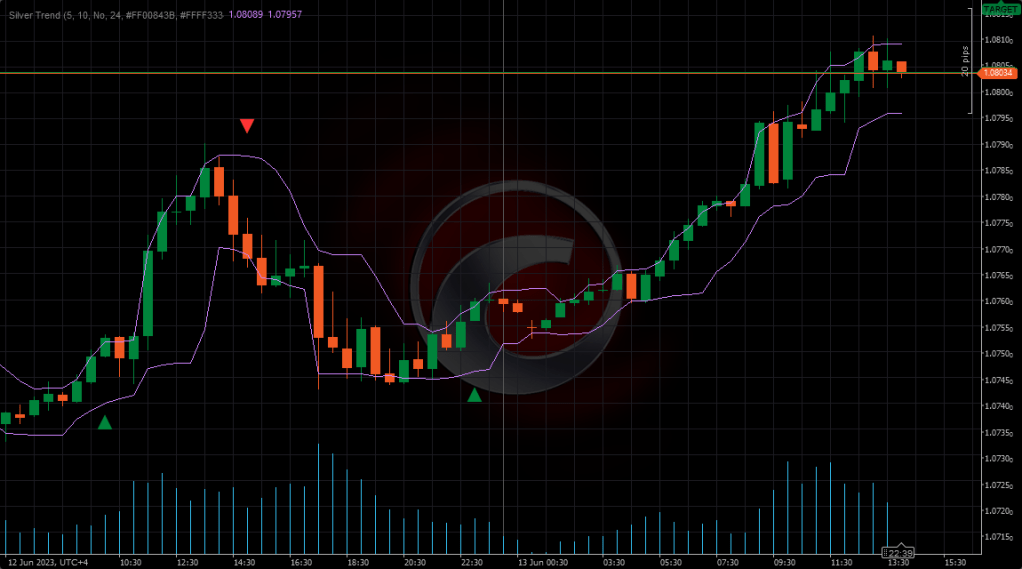
Trading in the financial markets requires a solid understanding of various tools and indicators that help in making informed decisions. cTrader, a popular trading platform, offers a wide range of indicators that cater to different trading styles and strategies. Whether you’re a novice trader or a seasoned professional, understanding these indicators can enhance your trading experience and improve your success rate. In this article, we will explore some of the essential indicators available in cTrader and how you can use them effectively.
1. Moving Averages (MA)
Moving Averages are one of the most commonly used indicators in trading. They help smooth out price action and identify trends by averaging the price over a specific period. In cTrader, you can choose from different types of moving averages, such as Simple Moving Average (SMA) and Exponential Moving Average (EMA).
- SMA calculates the average of prices over a set period, providing a straightforward view of the market trend.
- EMA gives more weight to recent prices, making it more responsive to recent market changes.
How to Use:
- Identify trend directions: Upward for bullish and downward for bearish trends.
- Spotting crossover signals: A common strategy is the crossover method, where traders look for the crossing of a shorter period MA over a longer period MA as a buy signal and vice versa for a sell signal.
2. Relative Strength Index (RSI)
The Relative Strength Index (RSI) is a momentum oscillator that measures the speed and change of price movements. It ranges from 0 to 100, with readings above 70 typically indicating overbought conditions and readings below 30 indicating oversold conditions.
How to Use:
- Identify overbought or oversold conditions: When the RSI moves above 70, it may indicate that the asset is overbought, suggesting a possible reversal. Conversely, when it drops below 30, it may indicate an oversold condition.
- Look for divergence: Divergence between RSI and price can signal potential reversals. For example, if prices are making new highs, but RSI is not, this could be a bearish signal.
3. Bollinger Bands
Bollinger Bands consist of a middle band (usually an SMA) and two outer bands set at standard deviations above and below the middle band. These bands expand and contract based on market volatility.
How to Use:
- Identify volatility: Bollinger Bands widen during volatile market periods and contract during less volatile periods.
- Spot potential buy/sell opportunities: When prices touch the lower band, it might be considered a buy signal, while touching the upper band could indicate a sell signal. However, these should be confirmed with other indicators.
4. MACD (Moving Average Convergence Divergence)
The MACD is a trend-following momentum indicator that shows the relationship between two moving averages of an asset’s price. It consists of the MACD line, the signal line, and the histogram.
How to Use:
- Crossover signals: A bullish signal is generated when the MACD line crosses above the signal line, and a bearish signal is generated when it crosses below.
- Divergence: Like RSI, MACD can also indicate divergence, suggesting potential trend reversals.
5. Fibonacci Retracement
Fibonacci Retracement levels are horizontal lines that indicate where support and resistance are likely to occur. These levels are based on the Fibonacci sequence and are often used to identify potential reversal levels in the market.
How to Use:
- Identify key levels: Traders often use Fibonacci retracement levels such as 38.2%, 50%, and 61.8% to identify potential support and resistance levels.
- Plan entry and exit points: These levels can be used to plan entry points, place stop-loss orders, or set price targets.
6. Ichimoku Cloud
The Ichimoku Cloud, or Ichimoku Kinko Hyo, is a comprehensive indicator that provides information on support and resistance levels, trend direction, and momentum.
How to Use:
- Cloud interpretation: The cloud itself, known as the Kumo, represents support and resistance areas. If the price is above the cloud, it indicates an uptrend; if below, a downtrend.
- Signals: A bullish signal occurs when the price is above the cloud, and the Tenkan-sen (conversion line) crosses above the Kijun-sen (base line). A bearish signal is the opposite.
Conclusion
The right set of indicators can be a game-changer in your trading journey. While cTrader offers a robust suite of tools, it’s essential to remember that no single indicator can provide all the answers. Successful trading often involves combining multiple indicators to confirm trends and signals, aligning them with your trading strategy, and always considering the broader market context.
Whether you’re looking to identify trends, gauge market momentum, or pinpoint potential reversal points, the indicators in cTrader provide invaluable insights. Experiment with different indicators, understand their nuances, and refine your approach to become a more effective trader. Happy trading!


 AlgoZone
Leave a comment